Connect calipers, scales and scanners so measurements are recorded as they are taken.
Inspections slow the line down, measurements get written on paper and typed in later, and one wrong digit passes a part that should have failed. With the caliper, the scale and the scanner writing straight into the record in front of the person using them, the reading is recorded the moment it is taken, pass or fail is immediate, and every measurement carries who took it, when, and on which lot.
- Readings recorded as they are taken, nothing retyped
- Pass or fail the moment the reading lands
- Every measurement traced to the lot, the operator and the time
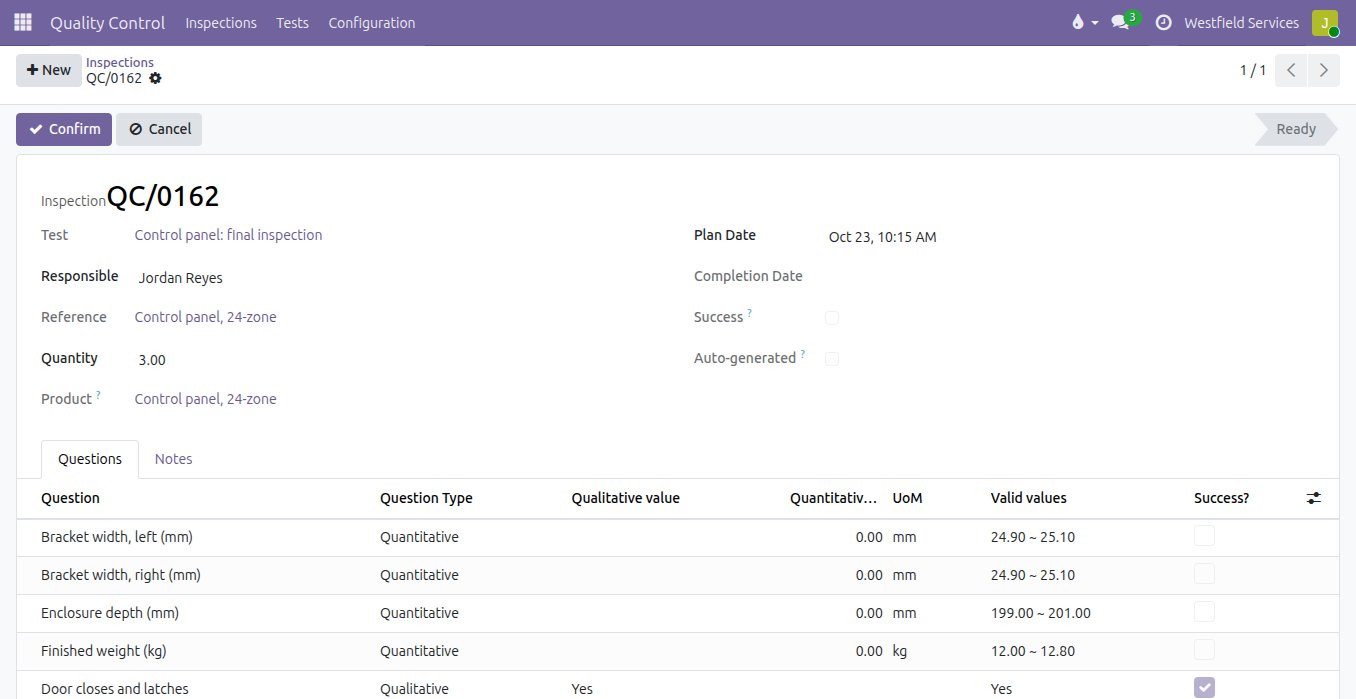
The reading lands on the inspection as the caliper closes, checked against its tolerance before the part leaves the inspector's hand.
A measurement is read off the caliper, written on a sheet and typed in at the end of the shift, by which time a bad part may already be in the next operation. With the devices linked to the record, the inspector measures the part and the reading appears in the field, checked against its tolerance; the part goes on the scale and the weight fills in the same way. Nothing is typed or transcribed, the verdict follows from the numbers, and a camera over the bench puts the photo on the same inspection.
- The reading in the field as it is taken
- Checked against the tolerance on the spot
- The device linked to the operation, so the right field fills in
- A footswitch to take the reading, with both hands on the part
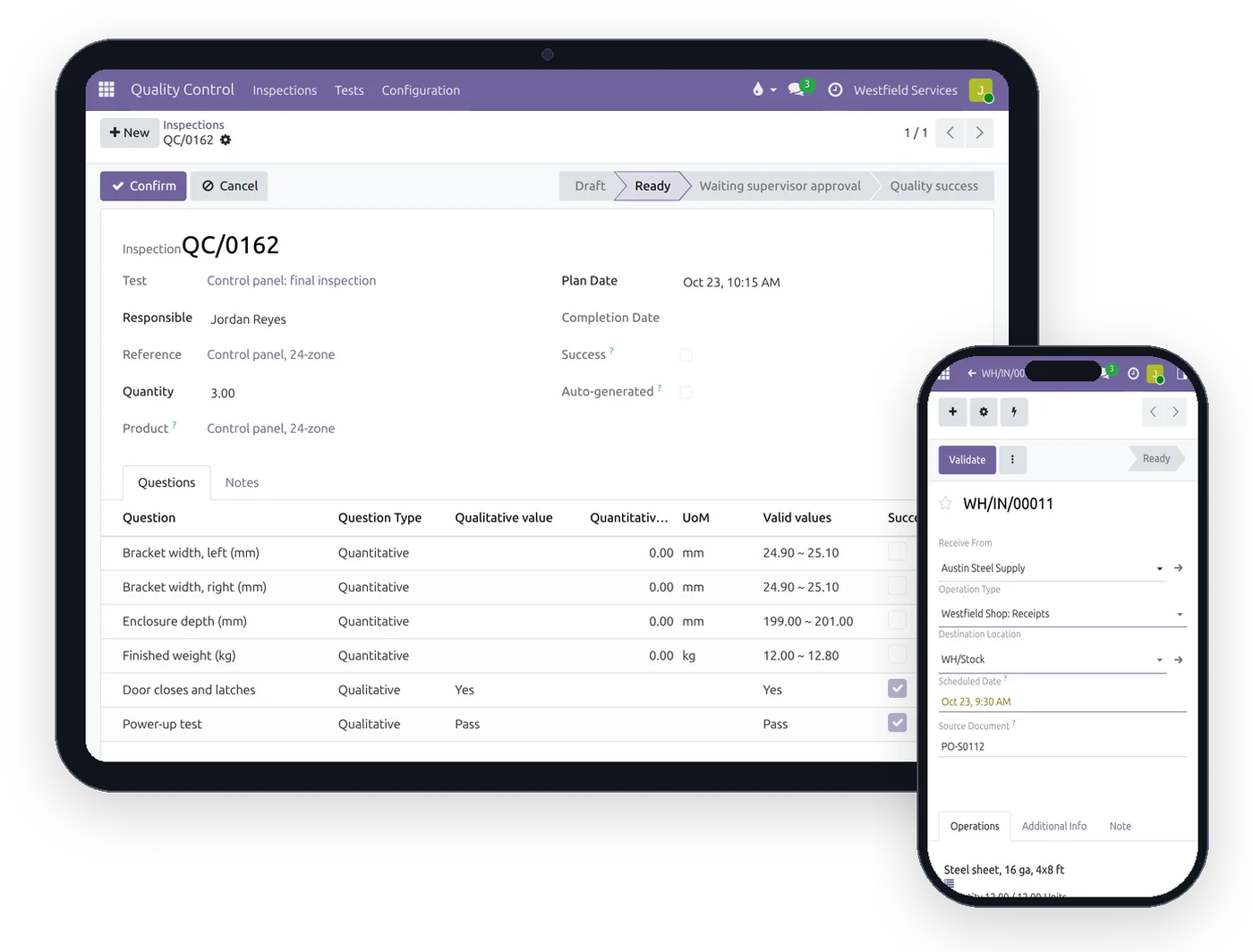
What arrived, how many and which lot are answered by the scanner before the driver has pulled away.
A delivery is counted on the packing slip, the lot numbers are copied by hand, and the shelf label is written with a marker. With a handheld paired to the phone or a fixed scanner at the dock, each barcode ticks a line on the receipt and counts the quantity, a lot or serial number scanned goes onto that line, a product that carries a control point opens its check on the spot, and the product and lot labels print as the receipt is validated. The same scanner picks the delivery, moves stock between bins and counts a shelf.
- Each scan ticks a line and counts the quantity
- Lot and serial numbers scanned onto the receipt
- Product and lot labels printed as the receipt is validated
- A handheld, a fixed scanner or the phone camera
Whether the device is supported out of the box or is the older scale with a serial port, the reading ends up on the record.
Half the equipment on a shop floor is older than the software, and the worry is that connecting it means replacing it. For supported devices, Odoo IoT puts a small box on the floor that finds the device over USB, Bluetooth, Wi-Fi or the network with the driver already on it, and we link it to the operation it belongs to: this scale to receipts at this dock, this caliper to this control point, with nothing to code on the floor. For the rest, the older scale with a serial port, the PLC on the press, the vision system with its own software, we write a device bridge, a small documented service that reads the equipment and writes the record the same way. Either way the person checks the part instead of typing the number.
- Supported devices found and linked to their operation
- A bridge for the equipment you already own
- Every reading with the device, the time and the person on it
- Monitored, so a silent device is noticed before the end of the shift
The devices
Each one at the point of work, writing into the record the person already has open.
Scales
The weight read into the receipt, the delivery, the manufacturing order or the sale, with the unit and the tare handled.
Measurement tools
Digital calipers, micrometers, height gauges and feeler gauges writing their reading into the quality check, against the tolerance.
Barcode scanners
Handheld or fixed, at the dock, the shelf, the bench and the packing table: the scan opens or ticks the record, no list to search.
Label and receipt printers
Product, lot and serial labels printed when the receipt is validated; shipping labels at packing; receipts at the counter.
Cameras
A photo of the part on the inspection, of the pallet on the delivery, of the damage on the alert, taken from the record.
Footswitches
Next step, take the reading, print the label, with both hands on the work.
Payment terminals
The card terminal at the counter or on the road, with the amount sent from the order and the payment written back.
Displays and the rest
Customer-facing displays, cash drawers, badge readers, and the older machine with a serial port that nothing else will talk to.
Related
Quality control
Inspections tied to every receipt and production run, so defects are caught before shipping.
See quality controlManufacturing
The bill of materials knows the lead time; the ship date is calculated.
See manufacturingReal-time reporting
Every machine on one live board, with an alert before the line stops.
See real-time reportingIntegration and automation
Devices, feeds and the apps between them, connected so each reading is entered once.
On the services pageSchedule a demo.
Tell us a little about your business and what you would like to see. We walk you through how this would work for a company like yours, at a time that suits you. The first conversation is free.