Reorder before the shelf runs dry and know what every import really cost you.
A distributor lives on thin margins and fast turns. Reordering happens when a picker finds an empty bin, the freight and duty on an import never reach the product cost, so the margin looks better than it is, and an order that could ship from the other warehouse waits for a phone call. As an Odoo partner, we set the software up around how you buy, stock and sell: reorder points in each warehouse, landed costs spread over every receipt, picking from the right building and shelf, dropshipping for lines you never stock, and pricelists that give each customer the terms they were promised.
- Reorder suggestions for each product in each warehouse
- Freight, duty and brokerage in the unit cost
- Each customer's prices applied on every order
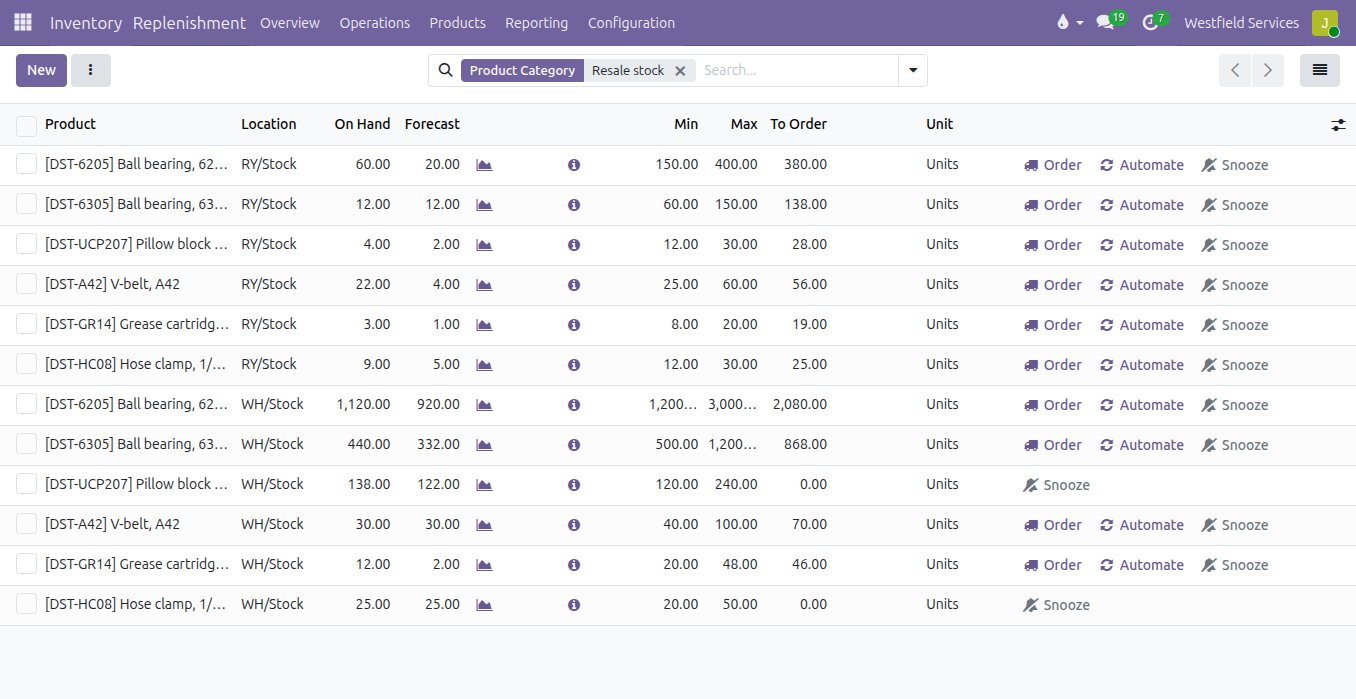
Let a minimum and a maximum in each warehouse decide what to buy, so your buyer works with suppliers instead of counting shelves.
The buying spreadsheet is a week old by the time it is finished, so fast movers run out while slow ones fill the racks. Each product gets a minimum and a maximum per warehouse, and the replenishment list shows what is on hand, what is already coming in and what to order, with the supplier and lead time taken from the product. Approve the lines and they become purchase orders grouped by supplier, or switch a product to automatic and the order is raised for you.
- A minimum and maximum per product in every warehouse
- A forecast that counts open orders and incoming stock
- Purchase orders grouped by supplier in one step
- Automatic reordering for the lines you trust
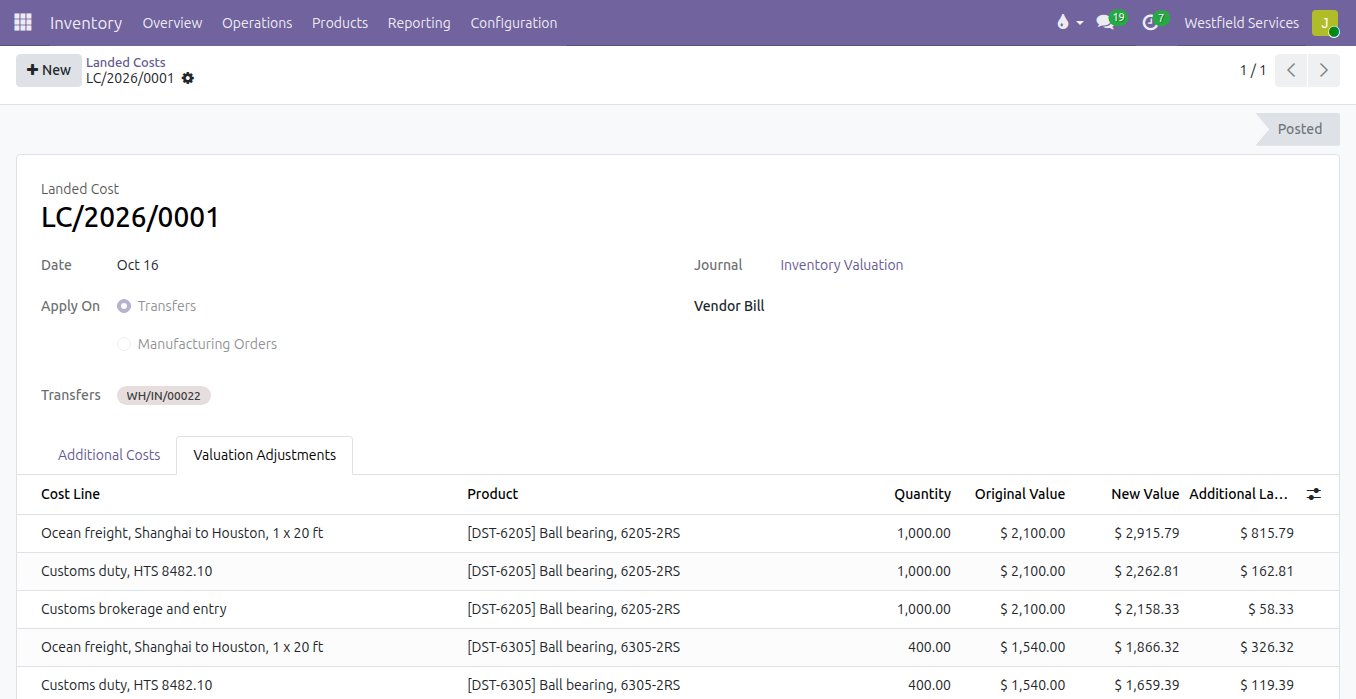
Put the ocean freight, the duty and the broker's fee into the cost of every bearing, so the margin you quote is the margin you make.
An import arrives with a price for the goods, then the forwarder, customs and the broker each send their own bill weeks later, and those bills end up as overhead nobody connects to the products. A landed cost is attached to the receipt it belongs to: freight split by quantity, duty by value, brokerage evenly or by weight, and the new value of each line posted to the books. The product cost then includes everything it took to get the goods onto your shelf, and so does every margin report after it.
- Freight, duty and brokerage attached to their receipt
- Split by quantity, value, weight or volume
- Unit costs updated and posted to the books
- Margins on orders from the true cost
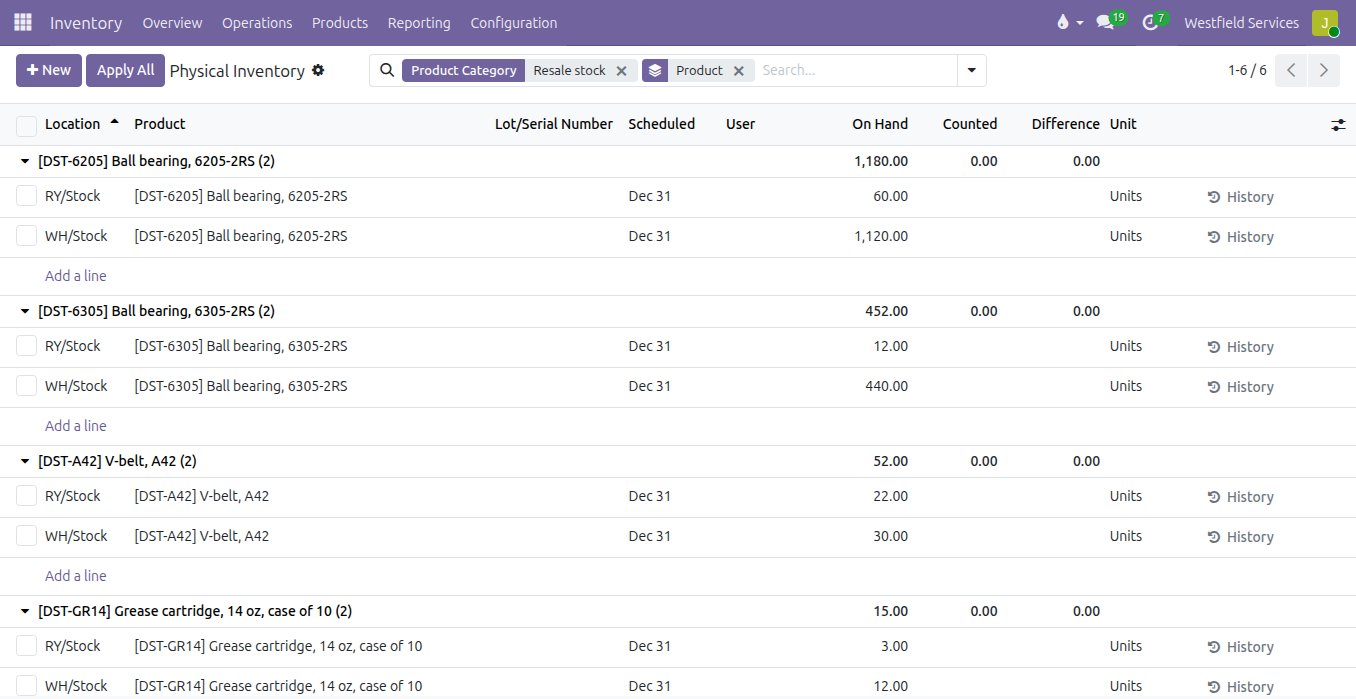
Know which warehouse holds the stock before you promise an order, and send the picker to the right shelf in that building.
With two buildings, the question of whether you have it turns into a call to the other site. Stock is kept per warehouse and per location inside it, each order is assigned to the warehouse that ships it, and that site's picking list shows what to pull and from where. Transfers between warehouses are documents with a receipt at the other end, so stock on a truck between sites is never stock that went missing.
- On hand per warehouse and per location
- Orders assigned to the warehouse that ships them
- Pick lists for each site with the location of every line
- Transfers between warehouses tracked until they arrive
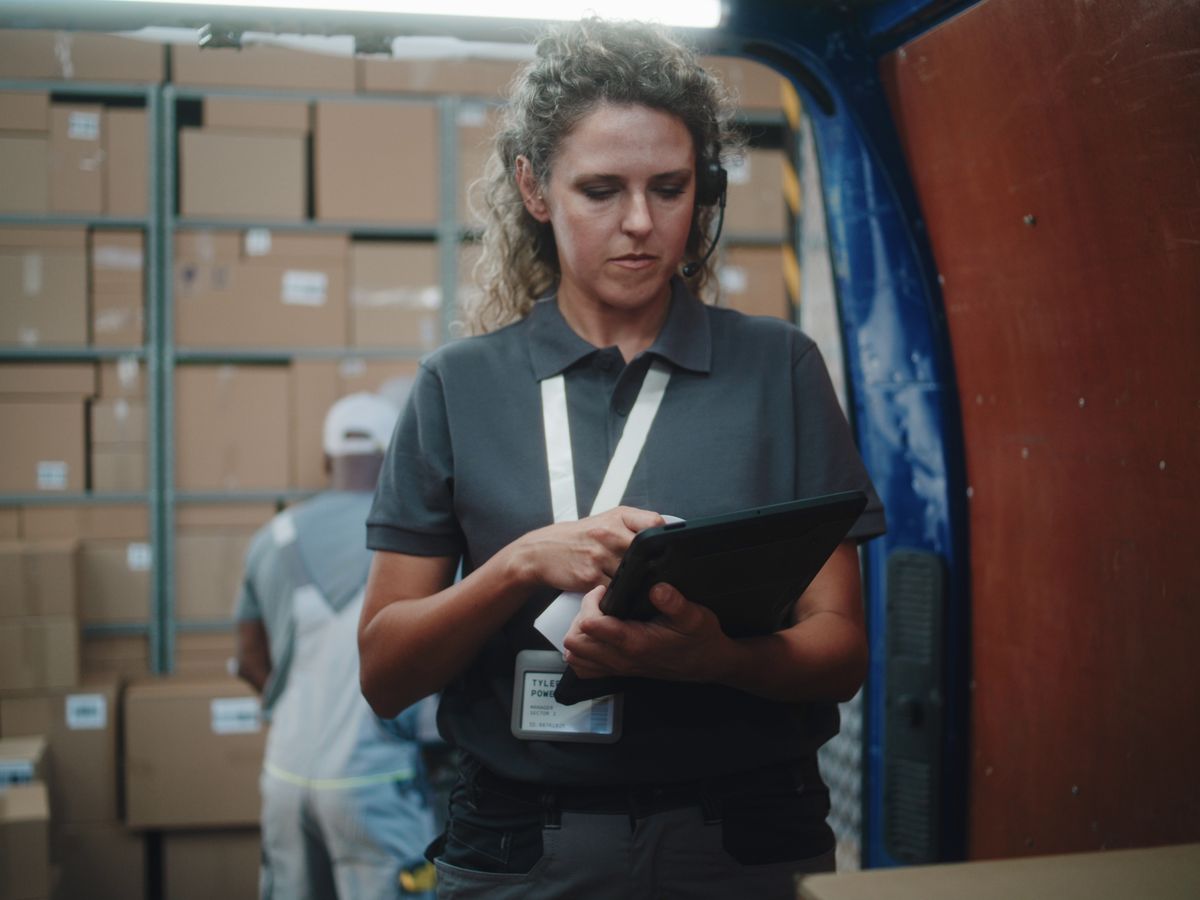
Sell the conveyor belt you never stock at the price that customer agreed, and have the supplier ship it straight to their site.
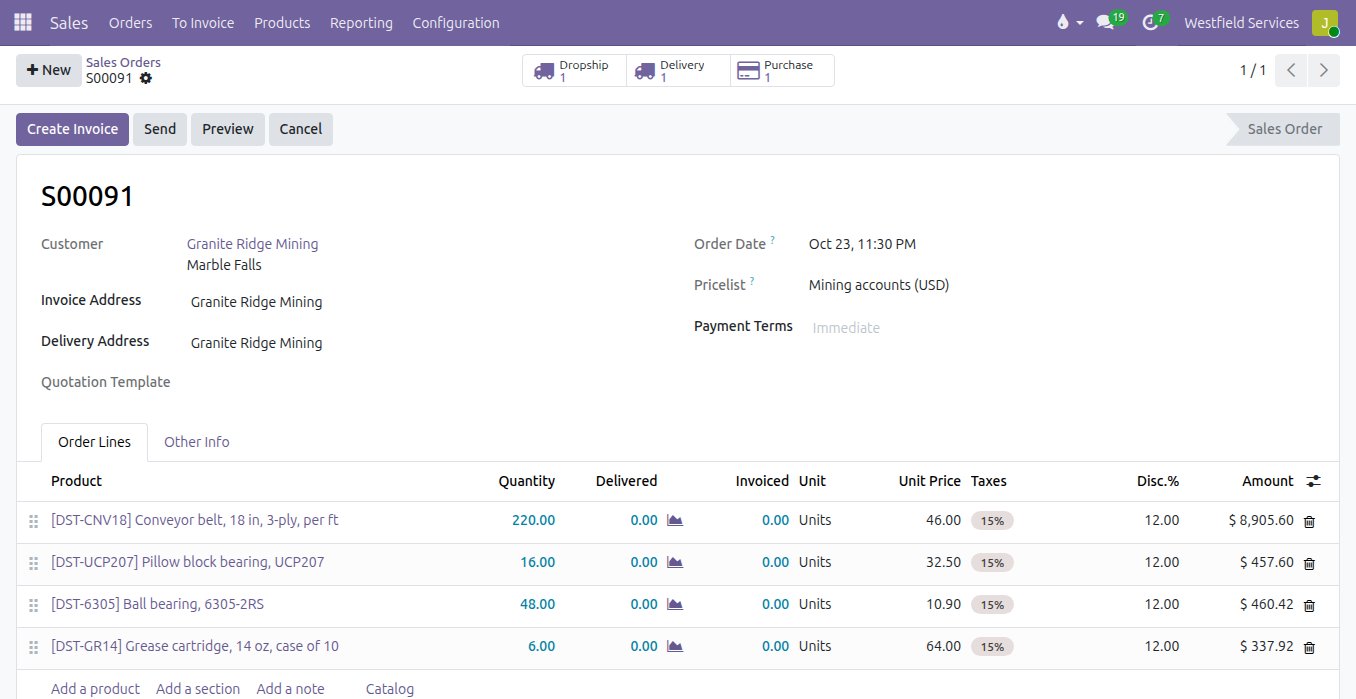
Some lines are too big or too slow to keep, and every account has its own deal: the mining customer gets twelve percent off, the contractor a better price from a hundred pieces. With the dropship route on a product, confirming the sale creates the purchase order to the supplier with your customer's address on it, and the delivery is recorded when the supplier ships. Pricelists hold each customer's terms by category, product or quantity, and apply themselves as soon as the customer is chosen, so nobody has to remember who gets what.
- Dropship lines raise the purchase order when the sale is confirmed
- The supplier ships to your customer and the delivery stays on record
- Pricelists by customer, category, product and quantity
- Discounts shown on the order and on the invoice
The apps and add-ons a distributor starts with.
Odoo Community at the centre, with open-source modules from the Odoo Community Association for the trade-specific parts.
Inventory
Stock per warehouse and location, reorder points, picking and transfers between sites.
Purchase
Replenishment turned into purchase orders by supplier, with prices and lead times kept per vendor.
Sales
Quotes and orders with each customer's pricelist applied and the shipping warehouse chosen.
Landed costs
Freight, duty and brokerage spread over the receipts they belong to and posted to the stock value.
Dropshipping
Lines you never stock bought from the supplier and shipped straight to your customer.
Accounting
Stock valued at landed cost, supplier bills matched to receipts and customer payments matched to invoices.
Financial risk for sales
A credit limit for each trade account, checked before an order can be confirmed.
Sales in a second unit
Sell by the case or the pallet while the stock is kept by the piece.
Inter-warehouse transfers
One transfer document that ships from one warehouse and receives at the other, with the stock in transit in between.
Related
Inventory
Accurate stock in every location, reordering that runs itself, lots you can trace.
See inventorySales
Quotes, orders, deliveries and invoices from one record, so nothing is typed twice.
See salesAccounting
Bank feeds matched automatically, bills read for you, books your accountant can work in.
See accountingCustomer portals
Customers sign quotes, pay invoices and check on jobs themselves.
See customer portalsOther industries we set up
Software as a Service
Billing, books, logins, support and email behind your product, set up and connected.
See how we helpConstruction
Estimates, job costing, subcontractors, progress billing.
See how we helpManufacturing
Real lead times, known costs before you build, dates you can keep.
See how we helpField service
Scheduling, work orders, parts, on-site invoicing.
See how we helpSchedule a demo.
Tell us a little about your business and what you would like to see. We walk you through how this would work for a company like yours, at a time that suits you. The first conversation is free.