Collect rent on schedule, fix what tenants report and send every owner a statement straight from the books.
Managing other people's buildings means a lease in one folder, the rent roll in a spreadsheet, maintenance requests in your texts and owner statements put together by hand at month end. We set up units and leases that raise the rent invoices on schedule, a tenant portal where requests are logged and followed through to the vendor who fixed them, vendor bills charged to the right building, and income and costs kept by property so the owner statement is a report you run.
- Rent invoiced on the lease schedule
- Tenant requests logged in a portal, not a text thread
- Owner statements by building from the books

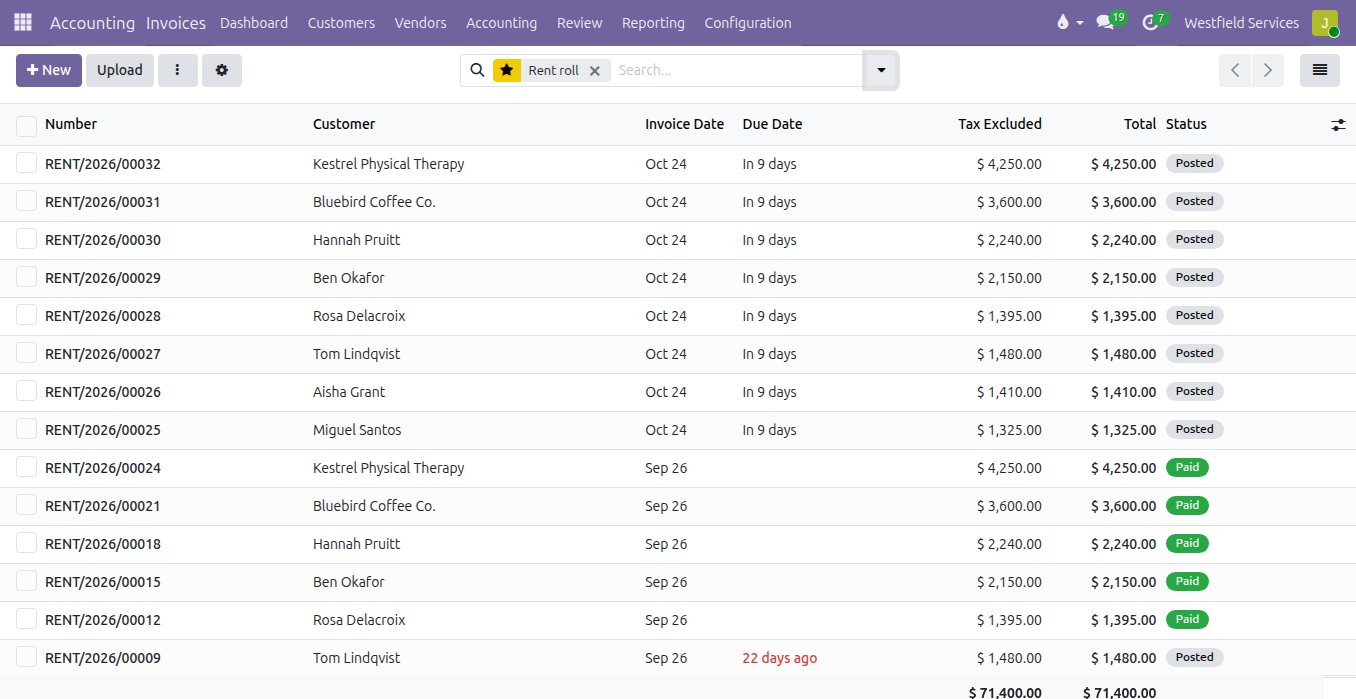
Rent invoices go out on the lease schedule, payments are matched as they arrive and the late ones are on your screen before the owner asks.
The rent roll lives in a spreadsheet that has to agree with the leases, the bank and the books, and every renewal or rent change is one more place to update. We build the buildings, units and leases as records of their own, with the term, the rent, the deposit and the renewal date on each, and each lease drives a recurring contract that raises the rent invoice for the right tenant, unit and building every month. Tenants pay online or by transfer, the bank feed marks the invoice paid, and the overdue list shows who is behind and by how many days.
- Buildings, units and leases with terms, deposits and renewal dates
- Monthly rent invoiced automatically from each lease
- Payments matched from the bank feed
- Overdue rent by tenant, unit and building
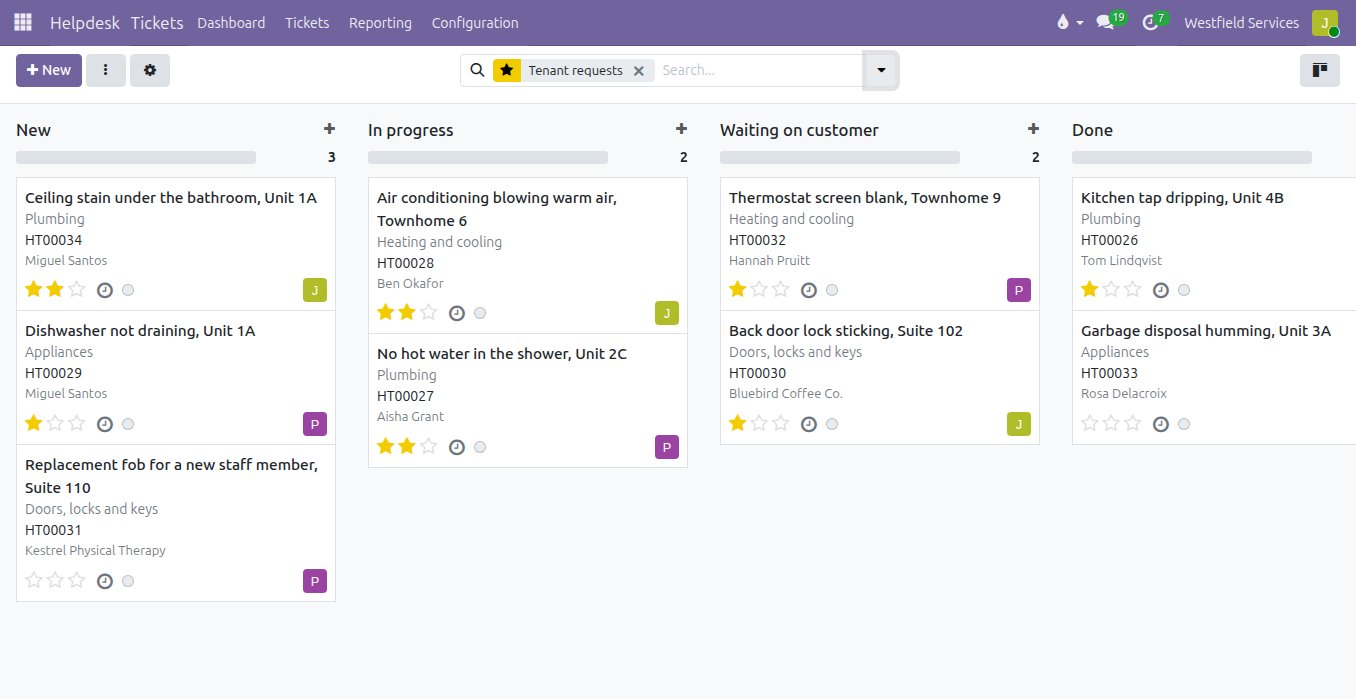
Give tenants a portal to report what is broken, so every request is logged, assigned and followed until the repair is done.
A leaking tap reported by text, a broken lock mentioned at the door and an air conditioning complaint left on voicemail all have one thing in common: nobody can say later when it was reported or who dealt with it. Tenants sign in to their portal and raise the request with a description and photos, and it arrives as a ticket for the right building with the tenant and unit on it. Your team assigns it, books the vendor, keeps the tenant updated from the same record and closes it when the work is signed off, with the whole history kept for the inspection or the dispute.
- Requests raised by tenants in their own portal
- Each request with the tenant, the unit and the category
- Status updates sent to the tenant from the ticket
- Planned servicing of boilers, roof units and alarms on a schedule
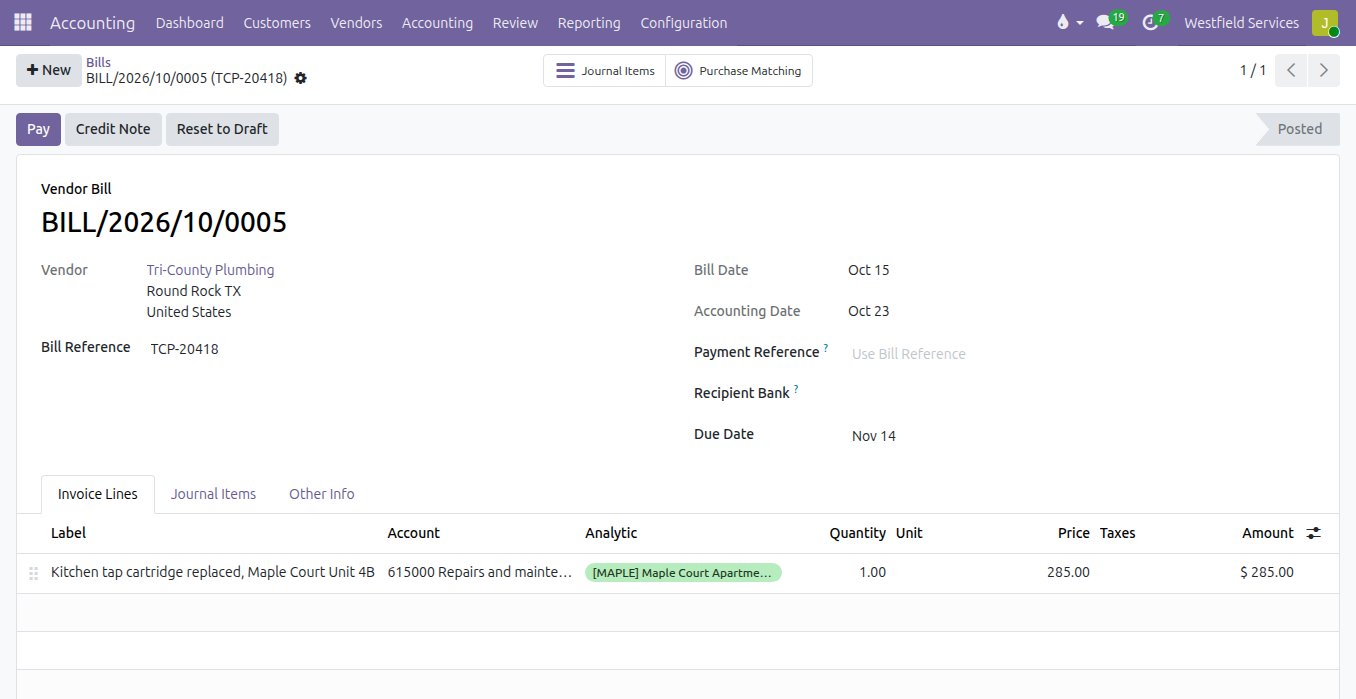
Every plumber, landscaper and HVAC bill lands on the building it belongs to, so nothing is charged to the wrong owner.
Contractor invoices arrive by email, on paper and as photos, and splitting them across buildings and owners at month end is where mistakes creep in. Vendors are records with their trade, their terms and their history of jobs. A bill is read from the emailed PDF or a photo texted from the site, and each line carries the building it was for, so the cost shows up on that property's figures and on its owner's statement. Payments to vendors match against the bank like everything else.
- Vendor bills read from the PDF or a photo
- Each line charged to a building
- Repairs and recurring services kept apart by property
- Payments matched against the bank
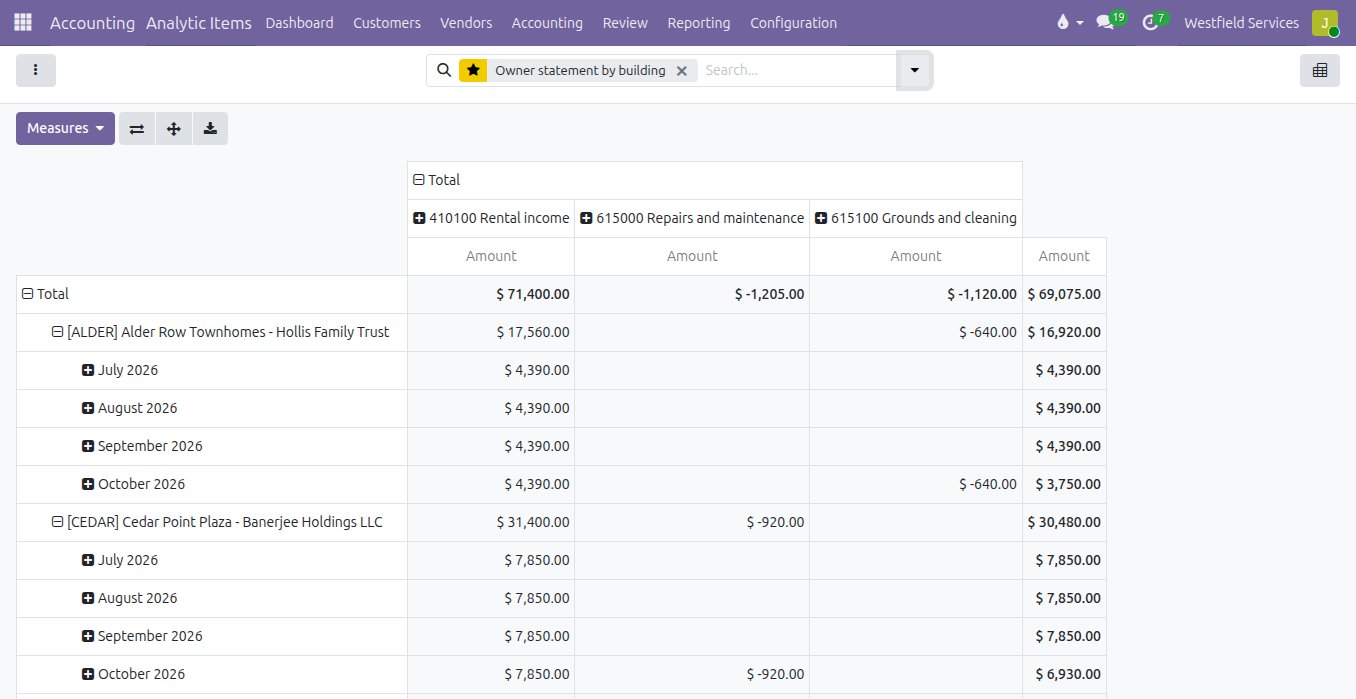
Owners get a monthly statement of rent collected and costs paid for their buildings, produced from the same books your accountant closes.
An owner statement assembled by hand from the bank, the rent roll and a pile of bills takes days and invites the question of which number is right. Because every rent invoice and every vendor bill carries its building, the statement is a report: rent by month, repairs, grounds and services, and the net for each property and each owner. We add an owner view to the portal so each owner sees their statement and the bills behind it, and the distribution is one payment rather than a calculation.
- Income and costs by building and by month
- Each owner sees only their own properties
- Statements and the bills behind them in an owner portal we build
- The same figures your accountant closes the books with
What we would set up for a property manager
The apps, add-ons and custom pieces behind the leases, the rent and the repairs, and what each one does for your portfolio.
Buildings, units and leases
The records Odoo Community does not have: each unit with its lease, tenant, rent, deposit and renewal date, driving the rent invoices.
Recurring contracts
Rent invoiced every month from the lease, for the right tenant, unit and building.
Accounting
Rent, deposits and vendor bills in the books, with every line kept by building for the owner statement.
OCA moduleHelpdesk management
Tenant requests raised in the portal, assigned to your team and followed until the repair is signed off.
Maintenance
Planned servicing of boilers, roof units, alarms and lifts on a schedule, per building.
Purchase
Work orders to vendors with the agreed price, matched to their bills.
Document management
Leases, inspection photos and certificates filed by building, with folders shared to tenants and owners.
Adomi Bank Sync
Rent payments imported from the bank and matched to the tenant invoices automatically.
Adomi add-onAdomi Agent
Text a photo of a contractor invoice or a note about a unit and it lands on the right record.
Related
Accounting
Bank feeds matched automatically, bills read for you, books your accountant can work in.
See accountingCustomer support
Live chat and tickets with the customer's history beside them.
See customer supportCustomer portals
Customers sign quotes, pay invoices and check on jobs themselves.
See customer portalsCustom application development
The screens and workflows your business needs when standard software falls short.
See custom developmentOther industries we set up
Software as a Service
Billing, books, logins, support and email behind your product, set up and connected.
See how we helpConstruction
Estimates, job costing, subcontractors, progress billing.
See how we helpManufacturing
Real lead times, known costs before you build, dates you can keep.
See how we helpWholesale and distribution
Purchasing, warehouses, deliveries, invoicing.
See how we helpSchedule a demo.
Tell us a little about your business and what you would like to see. We walk you through how this would work for a company like yours, at a time that suits you. The first conversation is free.