Plan production with real lead times, know your costs before you build, and promise dates you can keep.
A shop that plans in spreadsheets finds the shortage on the morning of the job and the real cost at the end of the quarter. With every component carrying its supplier's lead time and every operation its work centre, a confirmed order tells you what is missing, when it can ship and what it will cost before anyone picks up a tool. It begins with your bills of materials loaded from the spreadsheets they live in today.
- Ship dates from real lead times and real capacity
- The cost of every order known before the shop starts
- Work orders on a tablet at the work centre
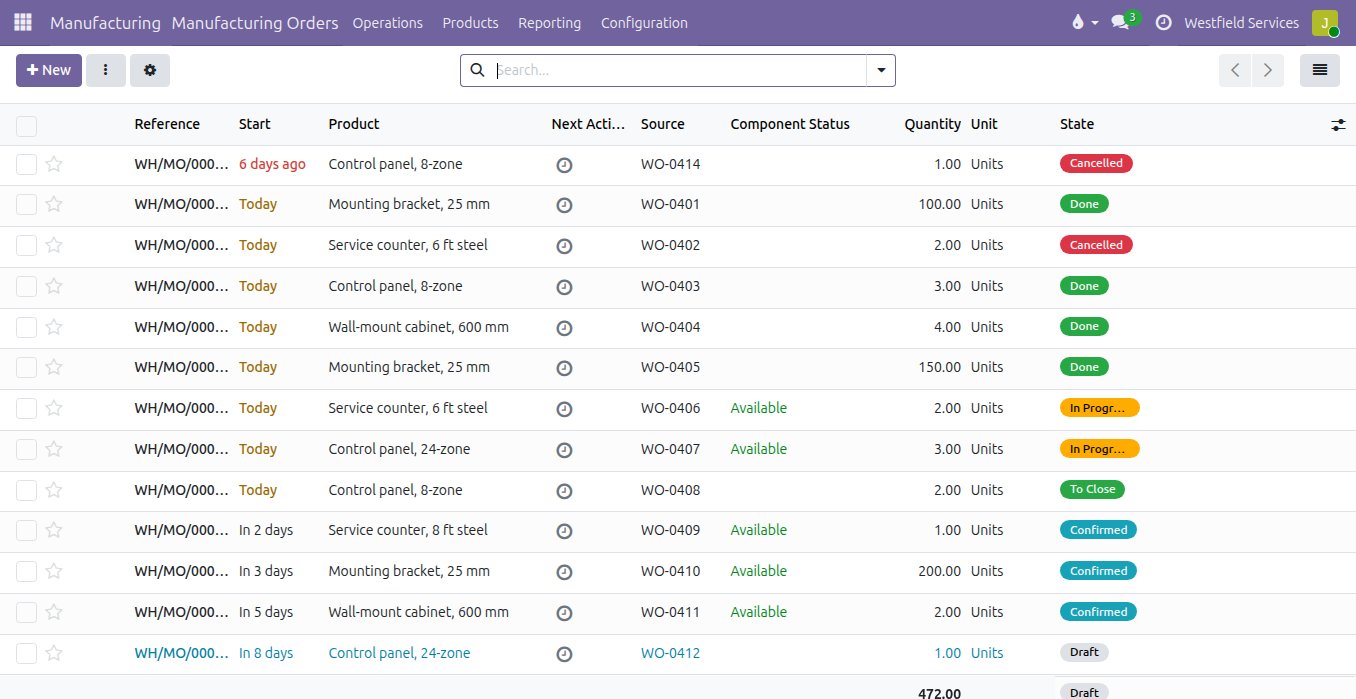
When an order is confirmed, the system already knows what to buy, what to make, what to send out, and the day it can ship.
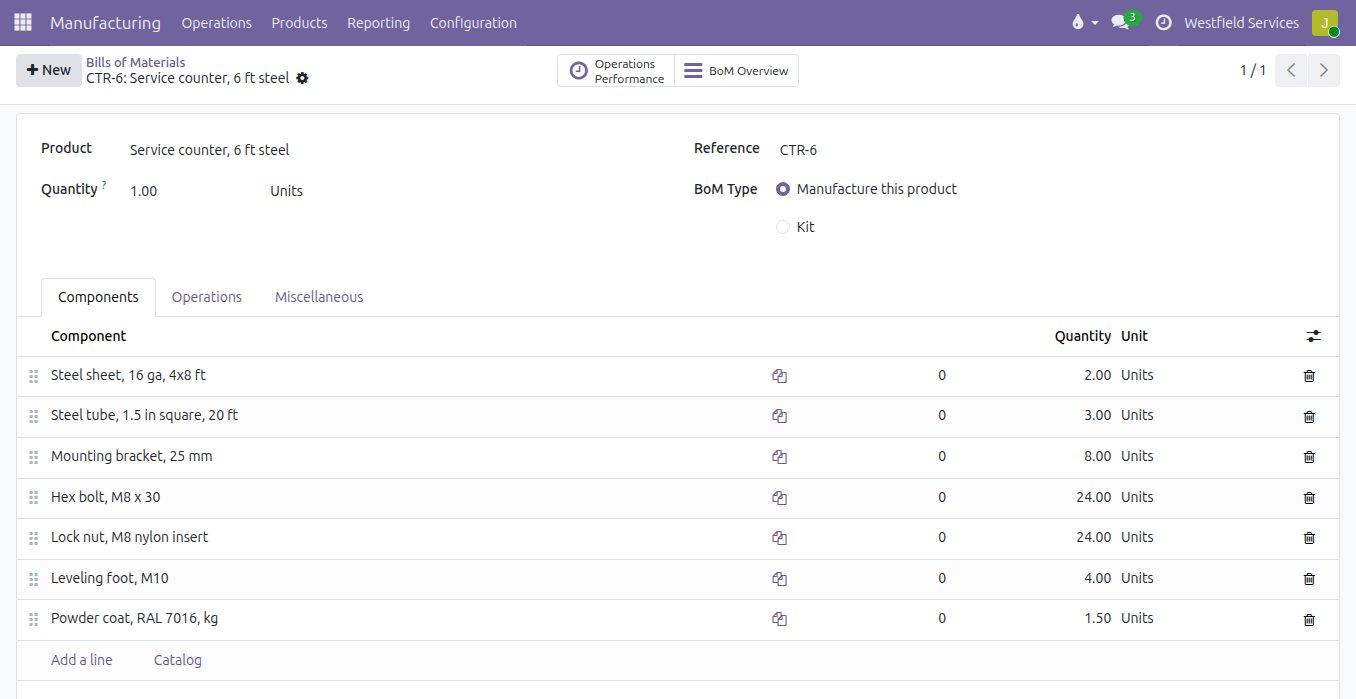
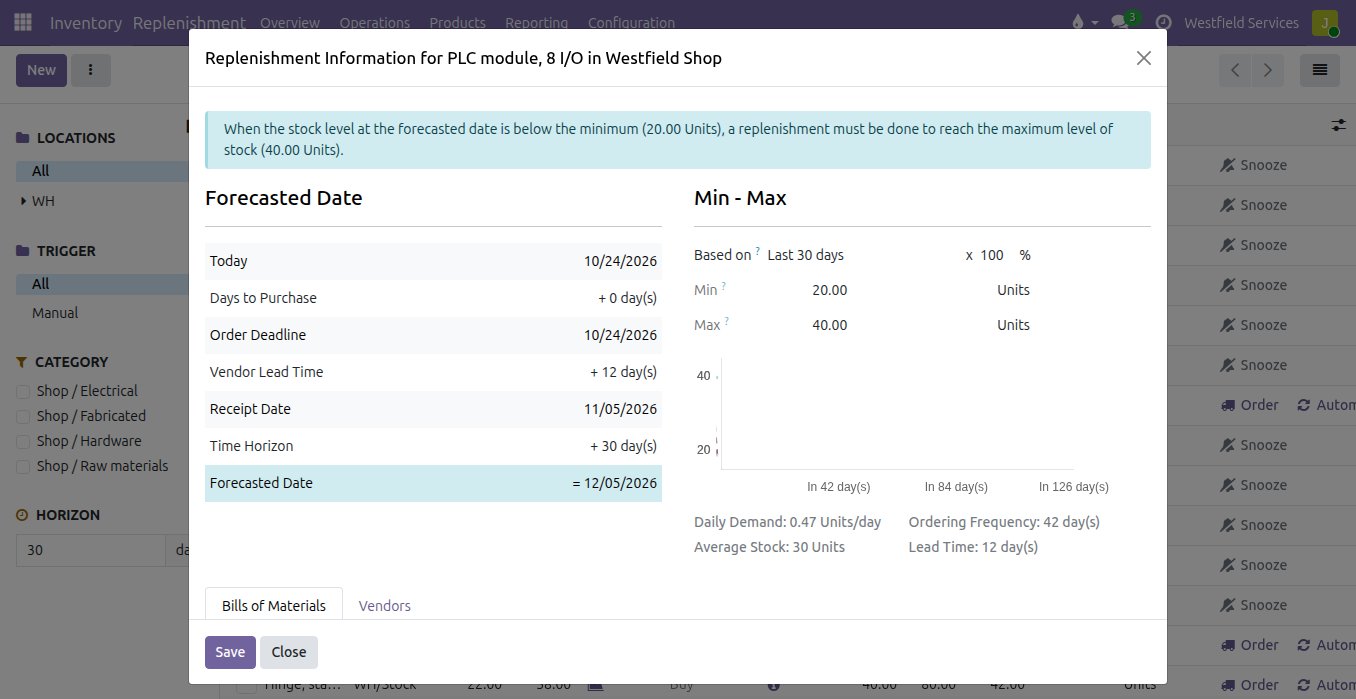
The lead time is a number someone remembers, the cost is whatever last quarter's margin says it was, and the shortage turns up when the operator goes to the shelf. With the bill of materials carrying every level of the product, its quantities and its costs, the lead time is worked back from the slowest supplier, the longest operation and the buffer you set. Material planning lists what the open orders and the forecast need against what is in stock and on order, and proposes the purchase orders, the manufacturing orders and the subcontracting orders for the rest, scheduled against the capacity of each work centre, so the morning of the job holds no surprises.
- The product structure to every level, with the cost at each
- The lead time broken down by supplier, operation and buffer
- What to buy, make or subcontract, from the open orders and the forecast
- Orders scheduled against the capacity of each work centre
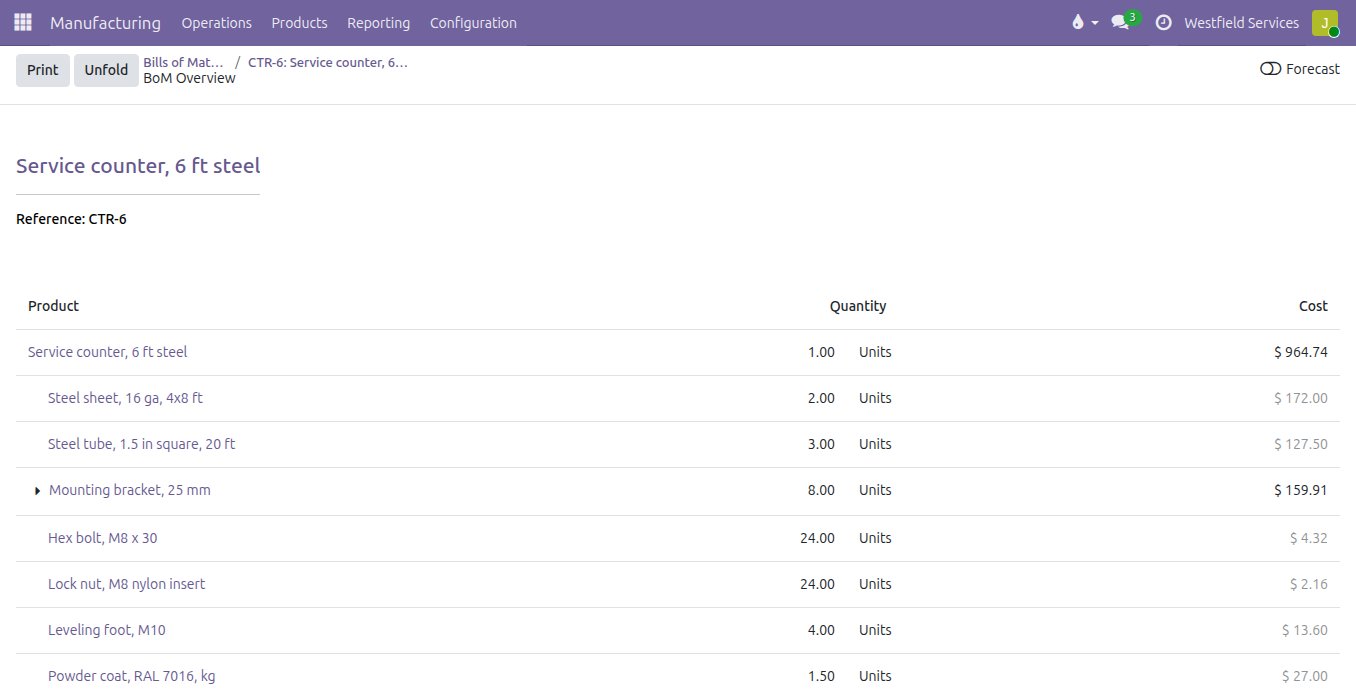
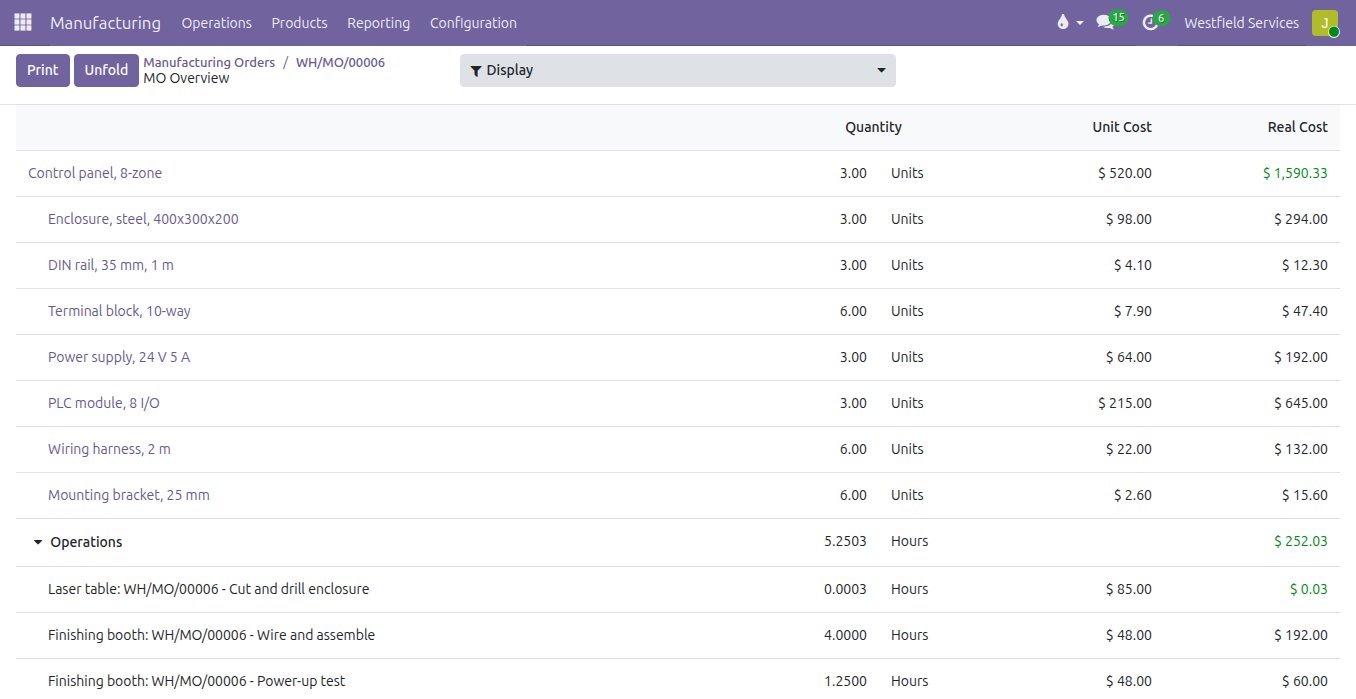
Know what an order will cost before it starts, and what it actually cost when it is done, component by component and hour by hour.
The real cost of a product is last quarter's margin divided by a guess, and a quote is priced from the last one that went well. When the bill of materials carries each component at its cost and each operation at the work centre's hourly rate, the cost rolls up through every level to the finished product and onto the quote. As the order runs, the material consumed and the time recorded give the real cost beside the planned one, the difference says where the estimate was off, and the finished goods go into stock at what they cost to make.
- Component costs and work centre rates rolled up through every level
- The planned cost on the order before it starts
- The real cost from material consumed and time recorded
- Finished goods valued at what they cost to make
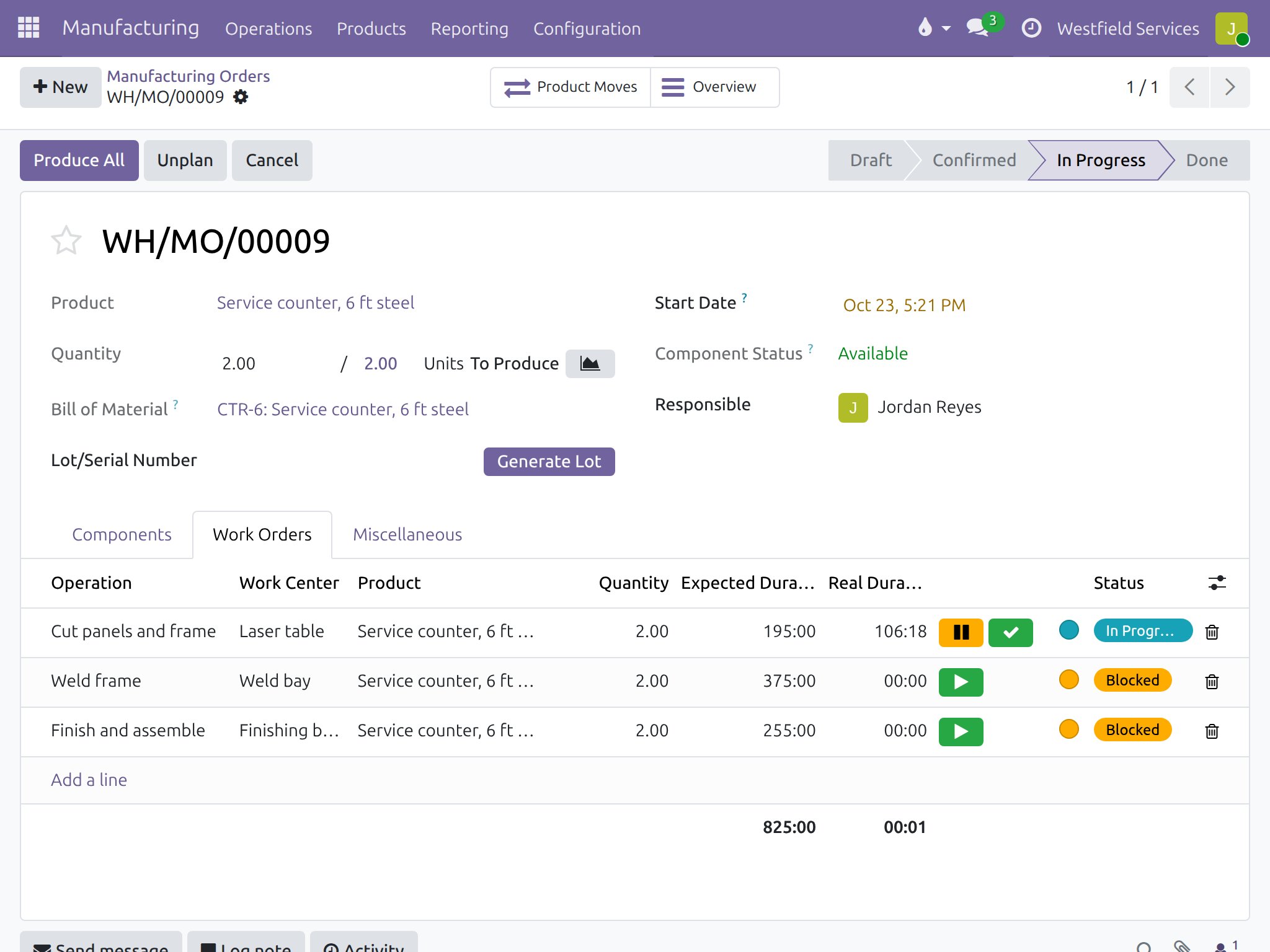
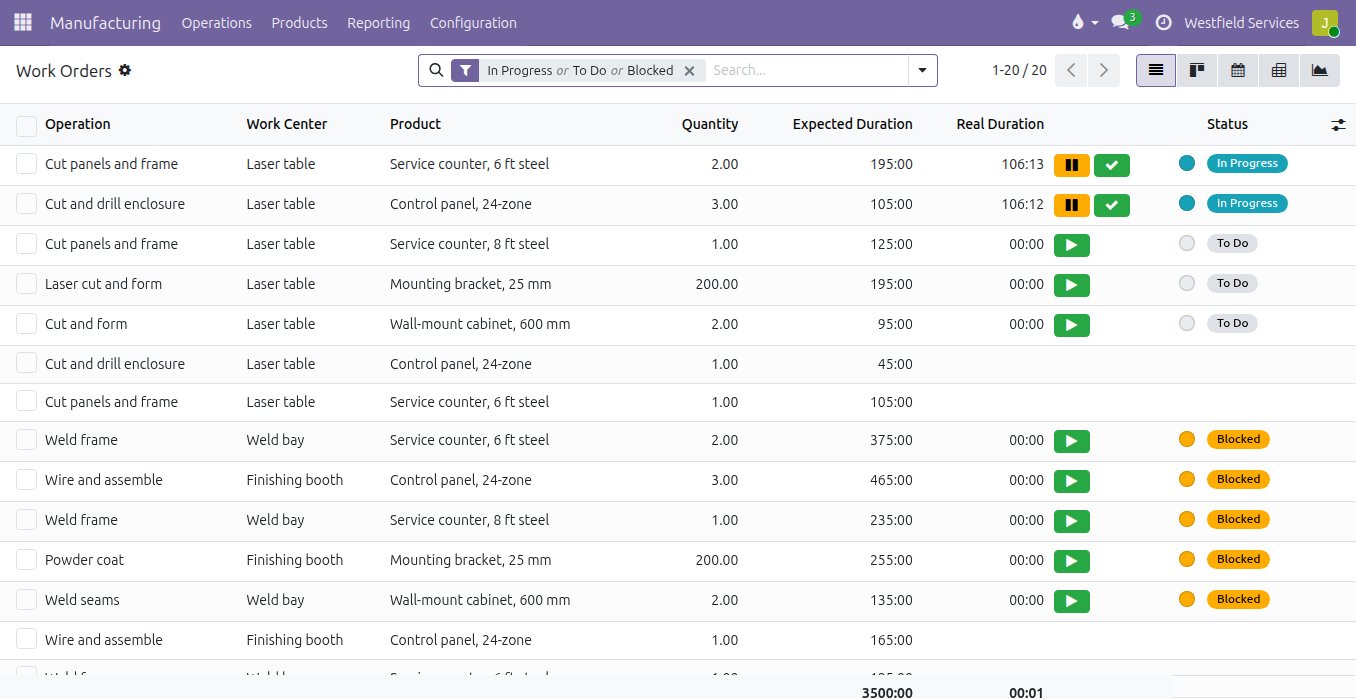
Operators start, pause and finish each step from a tablet at the work centre, and the office sees where every order is without walking the floor.
The traveller goes round the shop on a clipboard, time gets written down at the end of the shift, and the office finds out where a job is by walking out to look. At the work centre the operator sees the order, the step, the drawing and the quantity, and taps start and done. Time is recorded against the operation, the lot or serial number is scanned onto the finished product, the quality check opens when the step calls for it, and the next work centre sees the job coming.
- Start, pause and done recorded from the tablet
- The drawing and the instructions on the step they belong to
- A quality check where the operation calls for it
- Scrap, rework and a stopped machine recorded as they happen
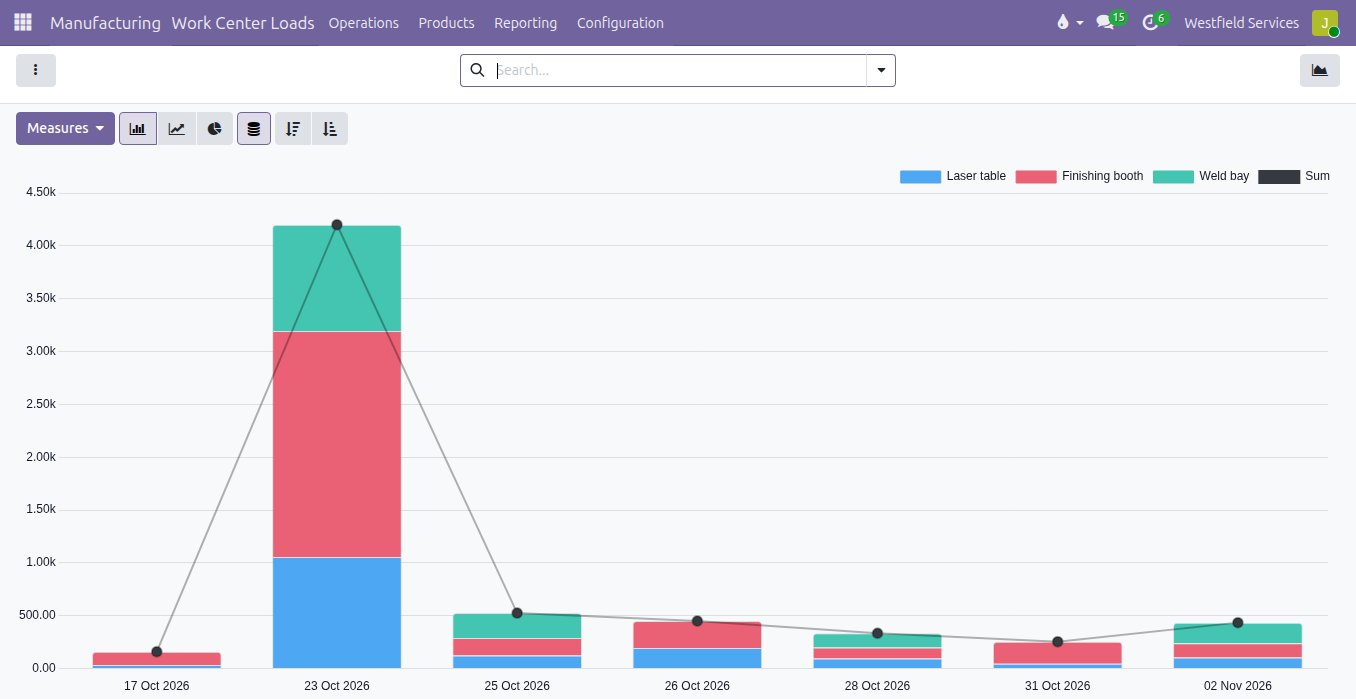
An overloaded bench or a machine drifting out of range shows up before it becomes a late order or a scrapped part.
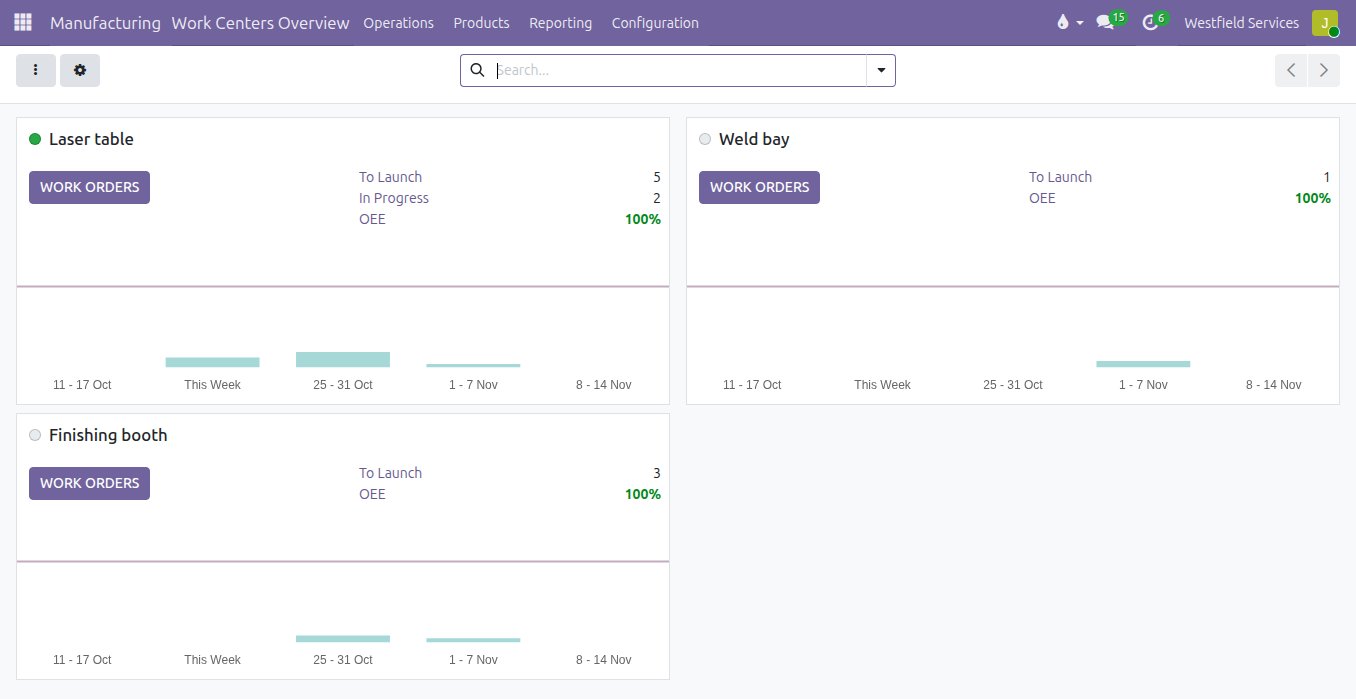
Capacity is planned in a supervisor's head and a machine problem is found when parts start coming out wrong. With the load on each machine and each bench laid out by day for this week and next, against the hours it actually has, you see where the time runs out while there is still room to move work or to send it out. Each work centre shows what is waiting, what is running and how well it has run, and a live board reads the machines themselves, running, idle or down, parts per hour against the plan, a temperature creeping up, and sends a message to the right person before a reading becomes a scrapped part.
- Load per work centre by day, against its capacity
- What is waiting, running and done at each work centre
- Machine states and parts per hour from the floor
- An alert with the reading in it, before the stop
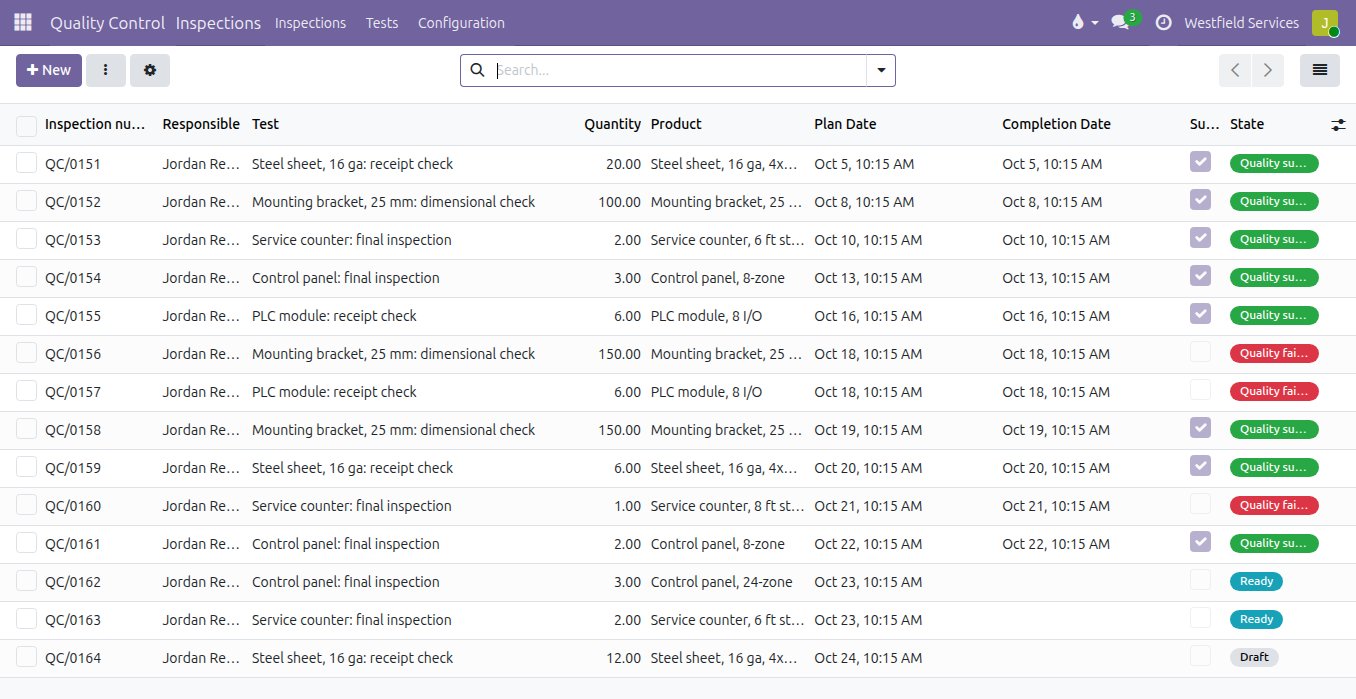
Catch defects before they reach the customer, with inspections tied to every receipt and production run.
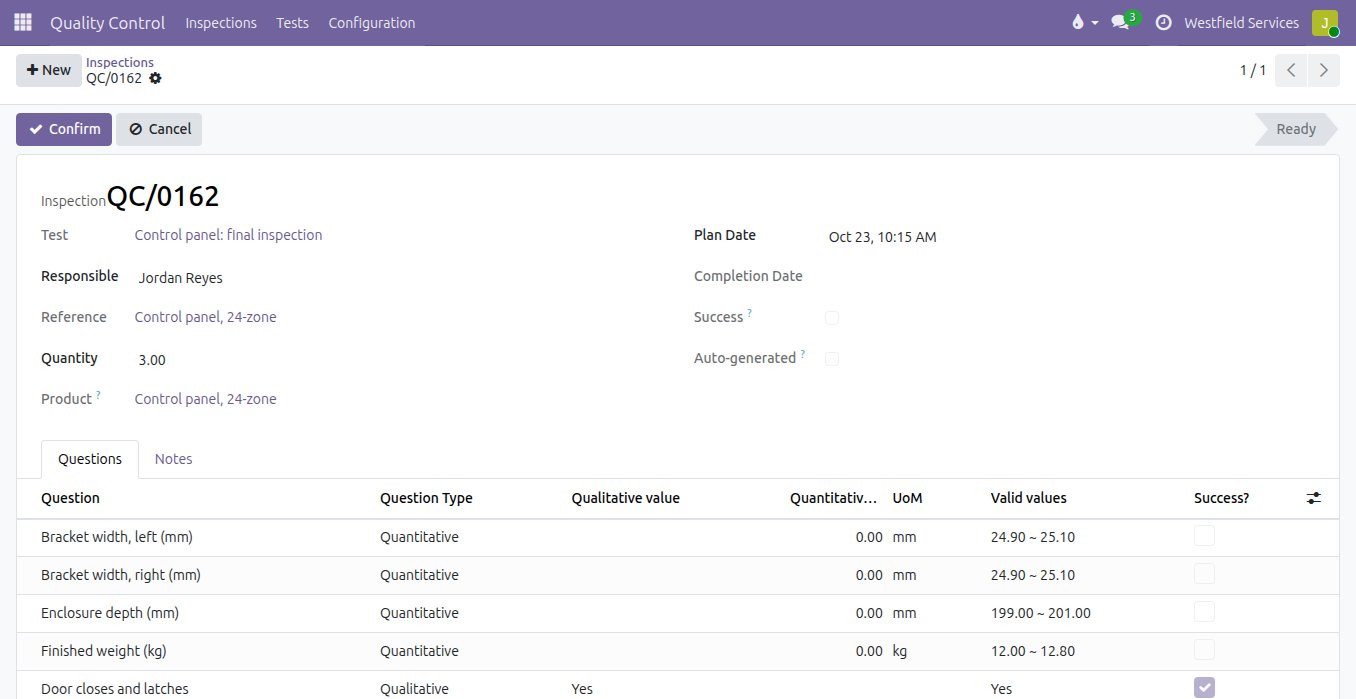
Quality lives on paper checklists and in the memory of whoever did the check, until a customer finds the problem. With checks tied to the receipt, the operation or the lot, every part is checked at the right moment, the result is on the record, and a failure stops the item before it ships.
- Parts scanned in with a barcode scanner, so the right check opens for the right item
- Measurements, photos and pass or fail on the record, with who checked and when
- A failure stops the item and alerts the right person
- Supplier quality tracked, so the conversation is about data
What it is for
The shop, from the quote to the last operation.
Bills of materials
Components, operations, variants and by-products, to every level. The quote uses the same bill, so the price and the shop agree.
Work centres
Each with its capacity, its cost per hour and its calendar, so a promised date rests on a real schedule.
Lead-time calculation
Supplier lead times, production times and the buffers you set, worked back from the order to a date the system can commit to.
Cost roll-up
Components at their real price and labour at the work centre rate, on the bill and on every order, so the margin is known while the job is open.
Material planning
What the open orders need against what is in stock and on order, with the purchase and manufacturing orders proposed.
Subcontracting
An operation or a whole product sent to a subcontractor, with the components shipped to them and the finished goods received back on the same order.
Related
Inventory
Accurate stock in every location, reordering that runs itself, lots you can trace.
See inventoryQuality control
Inspections tied to every receipt and production run, so defects are caught before shipping.
See quality controlConnected devices
Calipers, scales and scanners writing straight into the record.
See connected devicesImplementation
Manufacturing connected to sales, purchasing, stock and the books, set up around how your shop runs.
On the services pageSchedule a demo.
Tell us a little about your business and what you would like to see. We walk you through how this would work for a company like yours, at a time that suits you. The first conversation is free.