Catch defects before they reach the customer, with inspections tied to every receipt and production run.
Quality lives on paper checklists and in the memory of whoever did the check, until a customer finds the problem. With checks tied to the receipt, the operation or the lot, the right inspection opens the moment a part is scanned, the result is on the record with who checked and when, and a fail stops the item before it ships. It starts with the checks you already do, written down once.
- The right check opens when the barcode is scanned
- Pass or fail on the record, with who checked and when
- A fail stops the item before it ships
A scanned barcode opens the right check for the right part, so nothing is inspected against the wrong record.
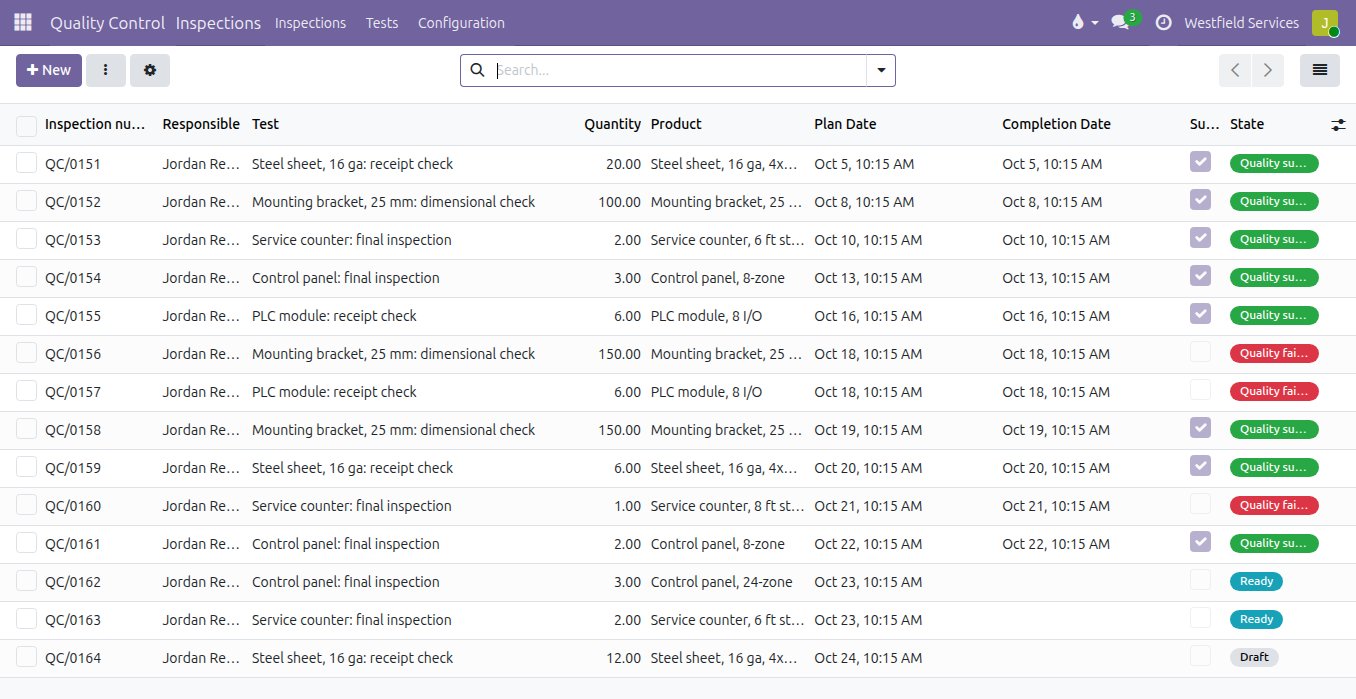
The inspector picks the part from a list, the list is long, and the result goes on a form that ends up in a drawer. A control point says which product, which operation and which supplier get checked, and how often: every lot, one in ten, or the first piece of a run. When the item's barcode is scanned at the receipt or the work order, the inspection opens on the spot with its questions: a measurement against a tolerance, a photo, a yes or no. Every check waiting, done or failed across the company sits on one list, and each one carries the item, the lot, the person and the result.
- Which product, operation and supplier, and how often
- The check opens because the product calls for it, at the receipt or the work order
- The measurement, the photo and the verdict on the inspection
- Every check in the company on one list, by status
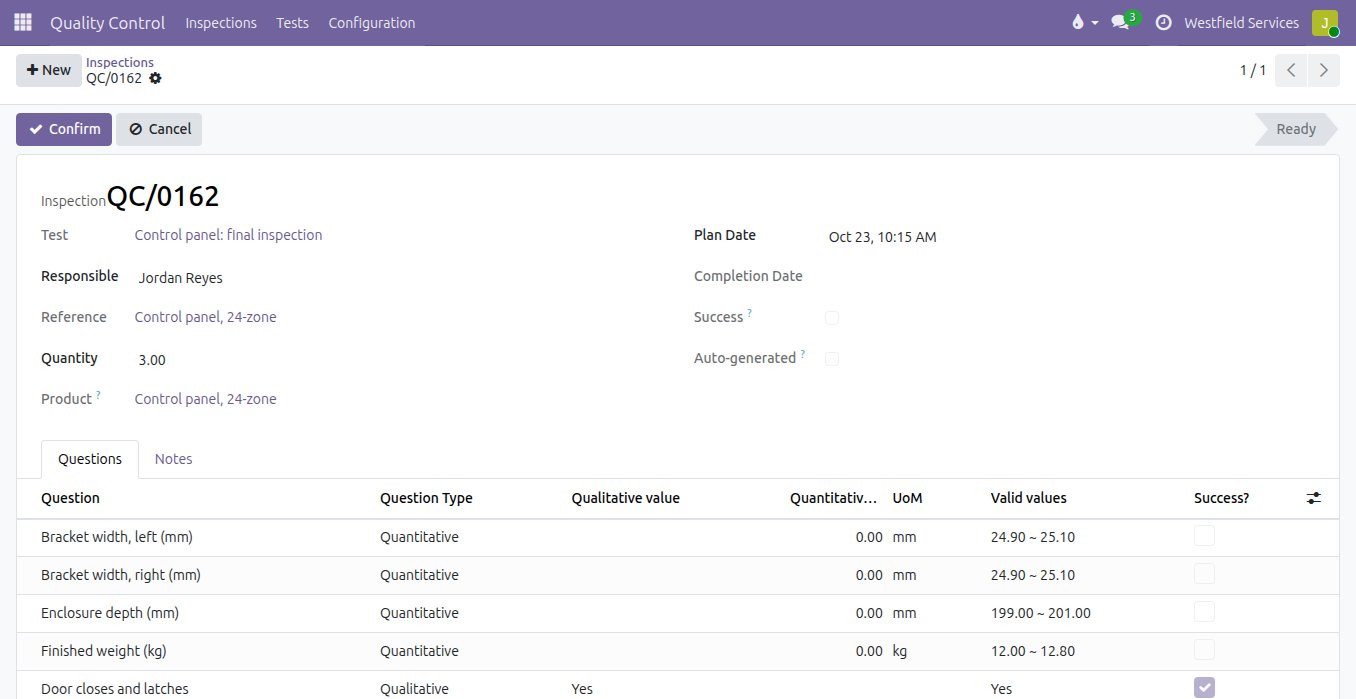
A reading outside its tolerance fails the check by itself, holds the lot and tells the right person what to look at.
A bad part gets noticed, somebody is told in the corridor, and the rest of the lot ships anyway. When a measurement falls outside its range the check fails without anyone deciding to be strict that day; the lot is held, an alert goes to the person responsible with the reading, the photo, the lot and the supplier on it, and the inspection waits for a decision: approve with a reason, rework, or send it back. Fails by product, supplier and work centre come from the same records, so the conversation with the supplier has numbers in it.
- The tolerance fails the check, with the reading on the record
- The lot held until someone decides
- An alert to the right person, with the photo and the supplier on it
- Fails by product, supplier and work centre, from the same records
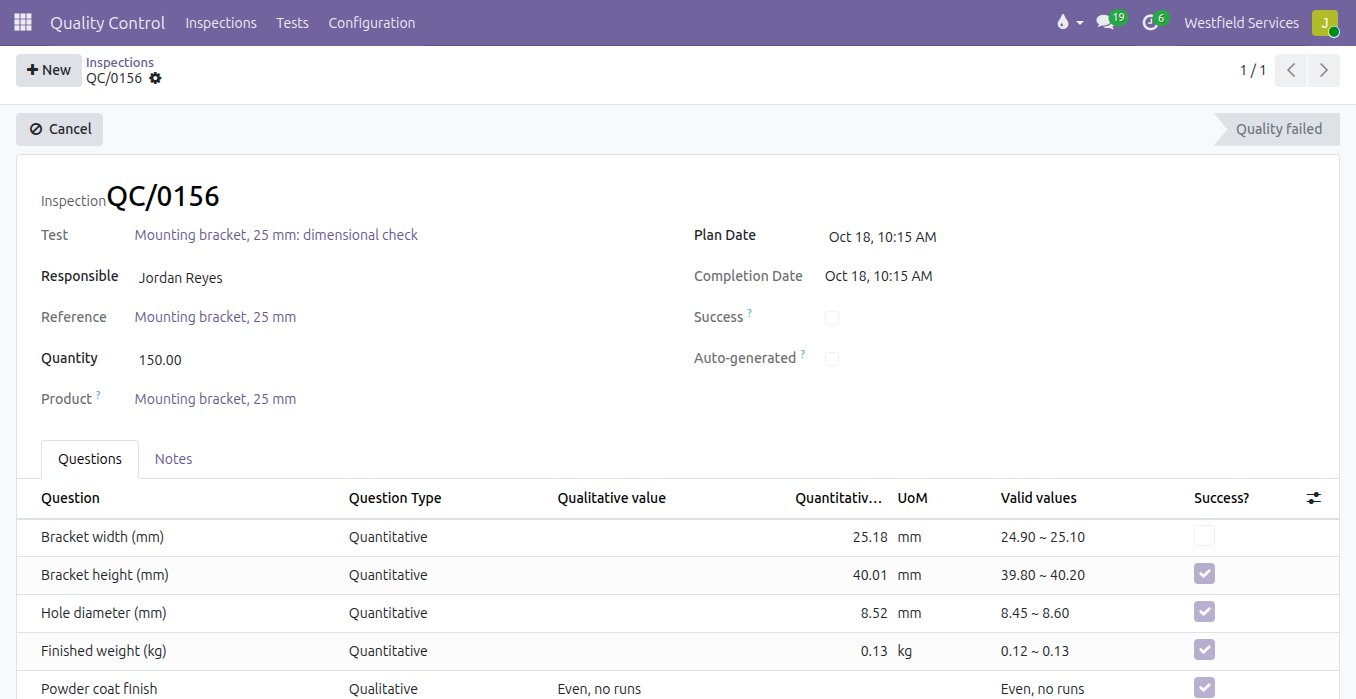
When the tolerance sits beside the reading and the next check is already queued, inspections stop slowing the line down.
The drawing is in one binder, the tolerance in another, and the inspector walks between them. With the check on a tablet at the bench, the drawing and the tolerance sit beside the field, a connected caliper or scale writes the reading as it is taken, and a camera over the bench takes the photo. The verdict is one tap, and the next item in the queue is already there.
- The tolerance beside the reading
- Readings from the caliper and the scale, when they are connected
- The queue of checks for this bench, in order
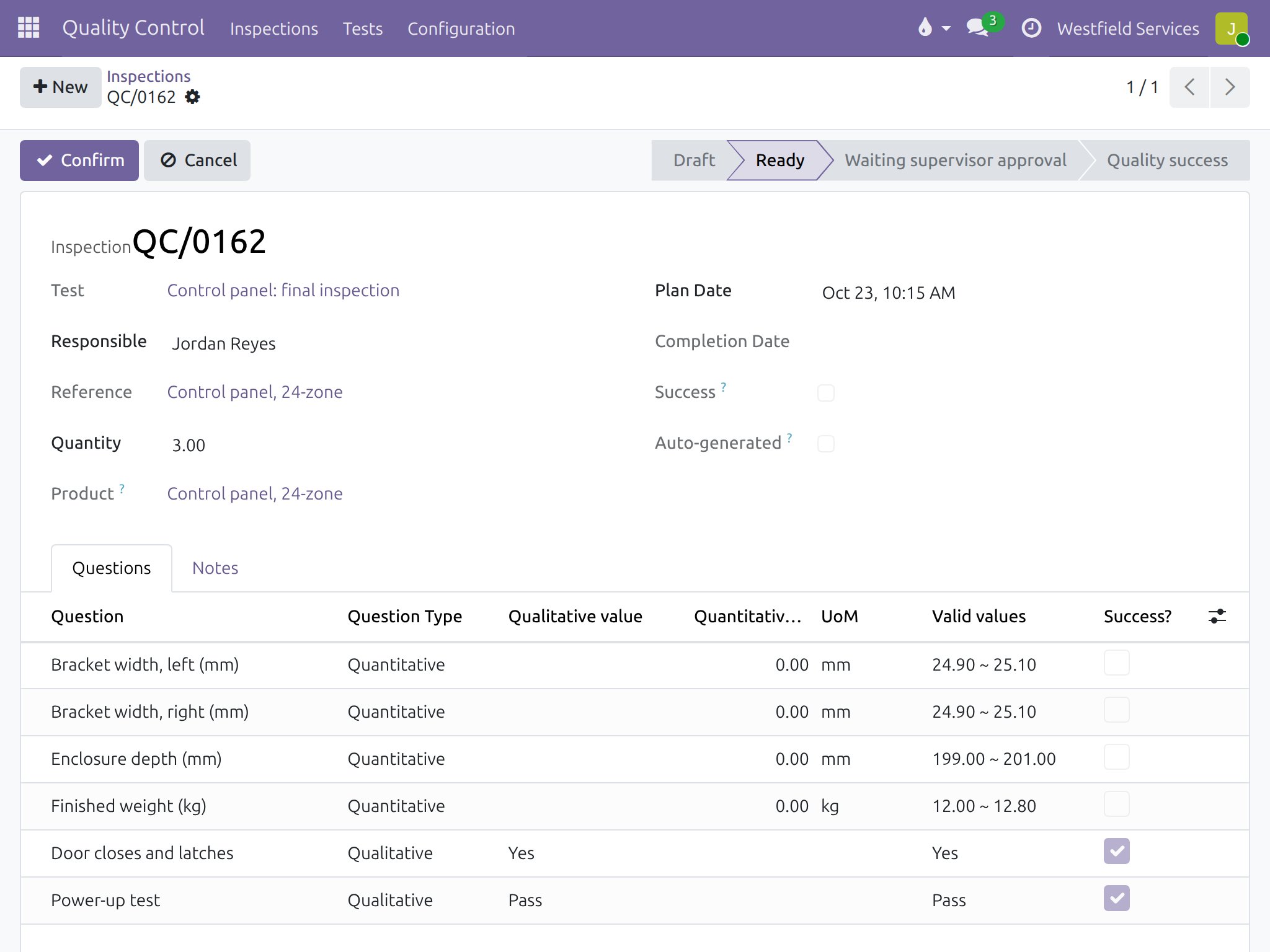
Every inspector runs the same test, so results line up across lots and a drift shows before a fail does.
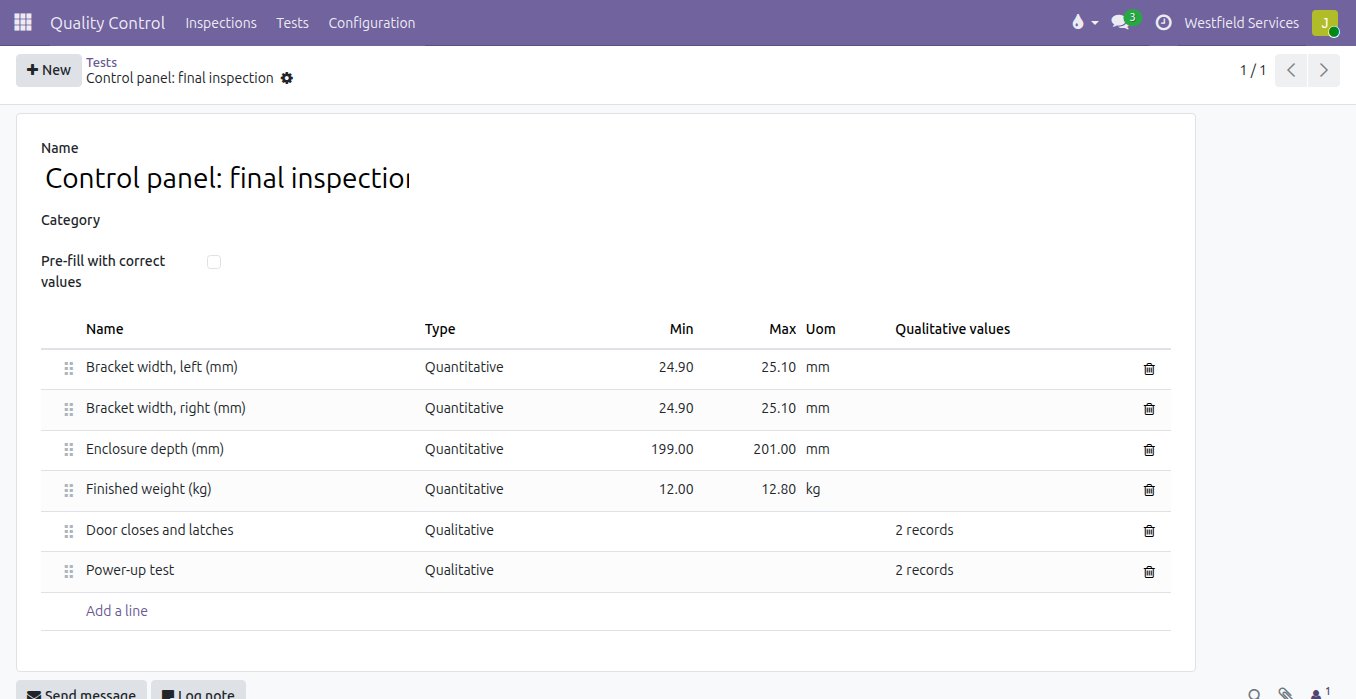
Each inspector has their own version of the form, and the results cannot be compared from one lot to the next. A test is written down once: what to measure, the unit, the tolerance, the instrument, the instructions. From then on every check against that product runs the same test, the tolerance fails the check on its own, and the results line up so a drift is visible before a bad part is.
- One definition for every inspector
- Tolerances that fail the check on their own
- Results that line up across lots, so a drift is visible
What it is for
The checks you already do, on the record instead of in a binder.
Checks by barcode
The barcode on the part, the lot or the pallet opens its check, so nothing is picked from a list and nothing is checked against the wrong record.
Control points
Which product, which operation, which supplier, how often: a check on every lot, one in ten, or the first piece of a run.
Measurements and photos
A number against a tolerance, a photo of the part, a yes or no. Read straight from the caliper or the scale when the device is connected.
Quality alerts
A fail becomes an alert with the photo, the lot and the supplier on it, assigned to someone, with the item held until it is resolved.
Lots and traceability
Every check sits on the lot it was done on, so a complaint or a recall is a search from the serial number back to the receipt.
Pass rates by supplier
Fails by product, by supplier, by work centre and by month, from the same records, so the conversation with the supplier has numbers in it.
Related
Manufacturing
The bill of materials knows the lead time; the ship date is calculated.
See manufacturingInventory
Accurate stock in every location, reordering that runs itself, lots you can trace.
See inventoryConnected devices
Calipers, scales and scanners writing straight into the record.
See connected devicesImplementation
Quality on the receipt, the work order and the lot, set up around the checks you already do.
On the services pageSchedule a demo.
Tell us a little about your business and what you would like to see. We walk you through how this would work for a company like yours, at a time that suits you. The first conversation is free.